
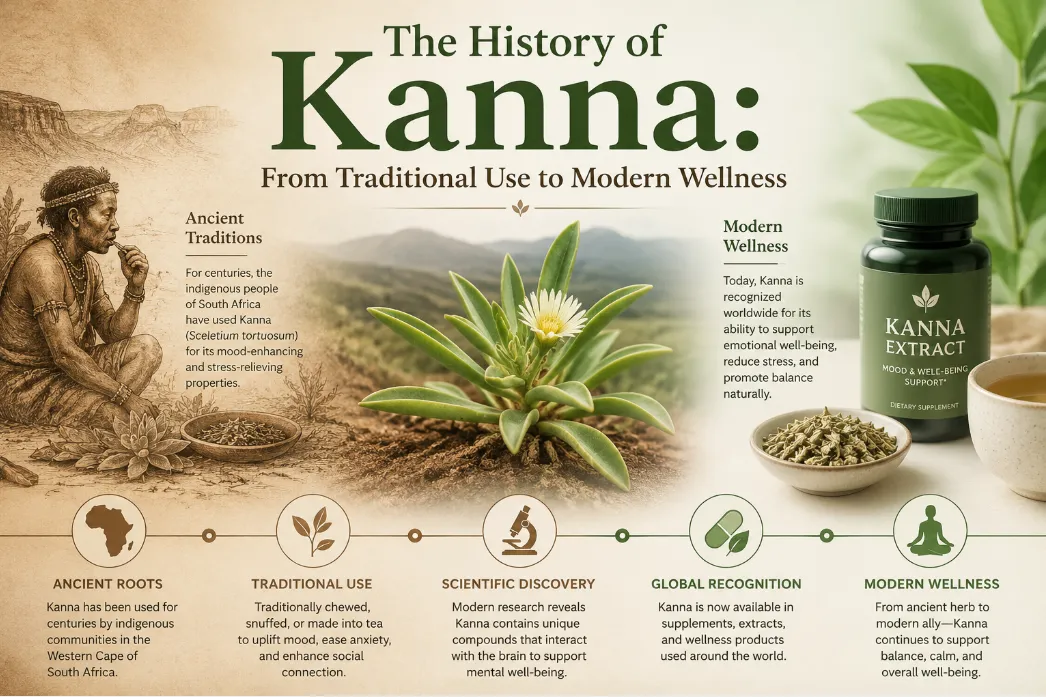
Kanna has become one of the most talked-about botanical ingredients in the modern wellness industry. As consumers increasingly seek natural products that support mood, relaxation, and overall well-being, interest in this remarkable South African plant continues to grow. Today, companies such as MyZen Organix are helping introduce Kanna-based wellness products to a wider audience, making this ancient botanical more accessible than ever before.
But Kanna’s story didn’t begin in modern supplement stores. Its history stretches back hundreds of years, rooted in the traditions of indigenous South African communities that valued the plant for its unique properties and cultural significance.
In this article, we’ll explore the fascinating history of Kanna, from its traditional use among ancient tribes to its growing popularity in today’s wellness market.
What Is Kanna?
Kanna, scientifically known as Sceletium tortuosum, is a succulent plant native to South Africa. It thrives in the country’s arid and semi-arid regions and has been used by indigenous peoples for generations.
The plant contains naturally occurring alkaloids, including:
-
Mesembrine
-
Mesembrenone
-
Mesembrenol
-
Tortuosamine
These compounds have attracted scientific interest due to their interaction with neurotransmitter systems associated with mood and emotional well-being.
Today, Kanna is commonly found in:
-
Gummies
-
Capsules
-
Powders
-
Extracts
-
Tinctures
However, its traditional uses date back long before modern supplement manufacturing existed.
The Origins of Kanna
The history of Kanna begins with the indigenous Khoikhoi and San peoples of Southern Africa.
These communities developed extensive knowledge of local plants and natural resources over thousands of years. Among the many botanicals they utilized, Kanna held a special place due to its versatility and cultural importance.
Historical records suggest that Kanna was commonly harvested from the wild and prepared using traditional fermentation techniques before use.
The plant became deeply integrated into daily life and was valued for both practical and ceremonial purposes.
Traditional Uses of Kanna
Supporting Emotional Well-Being
One of the primary traditional uses of Kanna was to promote emotional balance and well-being.
Members of indigenous communities often used the plant during:
-
Social gatherings
-
Community events
-
Ceremonial activities
Its use was associated with fostering positive social interactions and emotional resilience.
Combating Fatigue
Travelers, hunters, and laborers reportedly used Kanna to help manage long journeys and physically demanding activities.
The plant’s traditional reputation for supporting endurance contributed to its widespread use.
Managing Hunger and Thirst
Historical accounts suggest that Kanna was sometimes used during hunting expeditions and extended travel periods.
Its use in these situations helped make challenging conditions more manageable for those living in harsh environments.
Spiritual and Cultural Significance
Like many traditional botanicals, Kanna was not merely a practical tool.
It also played a role in cultural and spiritual practices, reflecting its broader significance within indigenous communities.
Traditional Preparation Methods
Unlike modern extracts and supplements, traditional Kanna preparation involved a multi-step process.
Harvesting
The plant was collected from wild-growing regions.
Fermentation
After harvesting, Kanna was often fermented.
This process typically involved:
-
Crushing plant material
-
Storing it in controlled conditions
-
Allowing natural fermentation to occur
Fermentation was believed to improve the plant’s properties while reducing certain naturally occurring compounds.
Drying
Once fermentation was complete, the material was dried for storage and later use.
Consumption
Traditional methods included:
-
Chewing
-
Brewing into teas
-
Smoking
-
Combining with other botanicals
These preparation techniques were passed down through generations.
Kanna and Early European Exploration
As European settlers and explorers arrived in Southern Africa, they began documenting local customs and botanical practices.
Historical writings from the 17th and 18th centuries mention Kanna and describe its use among indigenous populations.
These early observations helped introduce Kanna to a broader audience beyond South Africa.
However, for many years, the plant remained relatively unknown outside its native region.
Scientific Interest in Kanna
The modern scientific exploration of Kanna began as researchers sought to understand the compounds responsible for its traditional effects.
Scientists identified several active alkaloids within the plant, particularly mesembrine and related compounds.
Research has explored how these alkaloids interact with:
-
Serotonin pathways
-
Neurological signaling systems
-
Cognitive processes
While research remains ongoing, these discoveries helped spark renewed interest in Kanna as a botanical ingredient.
Kanna’s Transition Into Modern Wellness
The rise of the natural wellness movement created new opportunities for traditional botanicals.
Consumers increasingly began seeking:
-
Plant-based products
-
Natural wellness solutions
-
Alternative approaches to self-care
Kanna’s long history and unique alkaloid profile positioned it as an attractive option within this growing market.
As awareness increased, supplement manufacturers began developing modern Kanna products designed for convenience and consistency.
Popular Modern Forms of Kanna
Today’s consumers can find Kanna in various formats.
Kanna Gummies
One of the fastest-growing product categories due to convenience and ease of use.
Kanna Capsules
Popular for precise serving sizes and portability.
Kanna Extracts
Concentrated formulations designed for smaller serving amounts.
Kanna Powders
Flexible options that allow users to customize their intake.
Kanna Tinctures
Liquid extracts favored by some consumers for versatility.
These modern formats have helped introduce Kanna to audiences worldwide.
Why Kanna Is Growing in Popularity
Several factors have contributed to Kanna’s growing appeal.
Interest in Botanical Wellness
Consumers are increasingly exploring plant-based wellness products.
Historical Credibility
Kanna’s centuries of traditional use provide a compelling story that resonates with many consumers.
Scientific Exploration
Ongoing research continues to expand understanding of Kanna’s active compounds and potential applications.
Product Innovation
Modern formulations make Kanna more accessible and user-friendly than ever before.
Together, these trends have helped transform Kanna from a regional botanical into a global wellness ingredient.
The Future of Kanna
The future of Kanna appears promising as both consumer interest and scientific research continue to grow.
Potential developments include:
-
New product formats
-
Improved extraction methods
-
Expanded scientific understanding
-
Greater mainstream awareness
As the wellness industry evolves, Kanna is likely to remain an important botanical ingredient for years to come.
Frequently Asked Questions
Where Did Kanna Originate?
Kanna originated in South Africa and has been used by indigenous Khoikhoi and San communities for centuries.
How Was Kanna Traditionally Used?
Traditional uses included chewing, brewing into teas, smoking, and using fermented preparations during social, cultural, and practical activities.
Why Is Kanna Popular Today?
Modern consumers are increasingly interested in botanical wellness products, and Kanna’s long history and unique alkaloid profile have contributed to its growing popularity.
What Is the Scientific Name of Kanna?
The scientific name of Kanna is Sceletium tortuosum.
Is Kanna Still Used Today?
Yes. Kanna is now available worldwide in gummies, capsules, extracts, powders, and other wellness formulations.
Final Thoughts
The history of Kanna is a fascinating journey that spans centuries, cultures, and continents. From its origins among South Africa’s indigenous peoples to its place in today’s rapidly growing wellness industry, Kanna has maintained a unique role as a respected botanical with deep traditional roots.
As scientific research continues and consumer awareness expands, Kanna’s story is still being written. Its transformation from a traditional plant used by ancient communities into a modern wellness ingredient demonstrates how historical knowledge and contemporary innovation can come together to create new opportunities for future generations.

